About Dictionarying
This project is an interactive pronunciation platform designed to make spoken language visible, understandable, and easier to master. It is inspired by the groundbreaking work of Seeing Speech, a collaborative research initiative led by the University of Glasgow and developed in partnership with five other Scottish universities: Queen Margaret University, the University of Strathclyde, the University of Edinburgh, the University of Aberdeen, and Edinburgh Napier University. While articulatory visualization in language learning has earlier roots in areas such as ultrasound imaging and palatography research, Seeing Speech helped pioneer an accessible, interactive, web-based approach that combined high-quality audio with detailed visual articulatory animations. Inspired by this approach, the platform shows how the lips, tongue, and mouth move during speech production.
Each sound is accompanied by clear visual guidance, helping learners understand precise articulatory placement. The platform also highlights syllable stress in individual words and provides prosodic visualization for phrases, enabling users to perceive rhythm, intonation, and speech melody more effectively.
To deepen phonetic insight, the project also includes waveform visualization, allowing users to observe the acoustic structure and frequency patterns of speech at the phoneme level. This feature is informed by established research and acoustic analysis methodologies developed by the Institute of Phonetic Sciences at the University of Amsterdam, ensuring scientific accuracy and reliability. Together, these tools create a comprehensive, research-based environment for exploring, understanding, and mastering pronunciation.
The Team

Nikita Shimin is a full-stack engineer and product builder with over 20 years of experience across fintech, edtech, live media, and gaming. He specializes in scalable, high-performance web applications using React, Node.js, and TypeScript, and has a strong track record of taking products from early concept through to large-scale deployment. As the founder of IELTSing, he grew the platform to 250,000 registered users and over four million writing submissions — building and maintaining the full technical stack while continuously improving the product based on real learner needs. His broader portfolio includes Paper Racer — a multiplayer browser game that reached 110,000 daily active users — and contributions to Vimeo's WebRTC events platform, where he focused on real-time stream reliability and synchronized playback. At Dictionarying, Nikita leads the technical development of the platform, turning phonetic research and acoustic analysis into interactive, accessible learning experiences.

Roman Kovbasyuk is a Swiss-based lead designer and founder of Crisp Studio, specializing in user experience, product design, and visual systems. With a background in UX systems, product design, and digital branding, he focuses on translating complex ideas into clear, intuitive, and high-converting digital experiences. As Head of Design, Roman has led multidisciplinary teams across UX/UI, web, and branding — helping companies across Europe structure products, clarify positioning, and create cohesive digital ecosystems. Crisp Studio's portfolio spans SaaS platforms, language tools, and digital products where clarity and usability are business-critical. His work combines strategic thinking with hands-on execution, covering information architecture, interaction design, visual identity, and interface systems. Roman's strength lies in aligning brand, user experience, and business goals into a unified product experience — building things that are visually refined, scalable, and easy to understand. On Dictionarying, Roman ensures that complex pronunciation concepts — acoustic data, IPA notation, articulatory animation — are translated into interfaces that feel immediate and approachable to learners without a phonetic background.
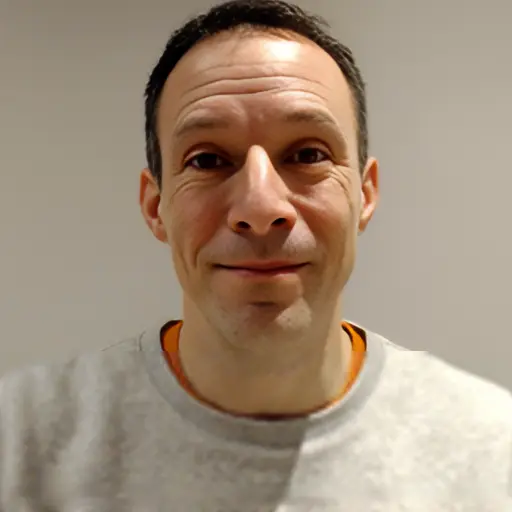
Ben Worthington is an English language educator and pronunciation specialist with nearly two decades of experience helping learners succeed in high-stakes international exams. As the founder of IELTSPodcast, he has worked with thousands of students worldwide, developing practical, results-driven methods for improving speaking, listening, and overall language performance. With a background in linguistics and language teaching from Manchester Metropolitan University, Ben focuses on how learners acquire pronunciation and fluency in real-world contexts. His work emphasizes clarity, intelligibility, and measurable progress, combining structured training with insights from modern research in second language acquisition. At Dictionarying, Ben leads the linguistic direction and methodology, ensuring that pronunciation is taught in a way that is both scientifically grounded and accessible to learners. His approach bridges theory and practice, turning complex phonetic concepts into clear, actionable guidance that learners can apply immediately.
The Methodology
Our approach is built around a structured learning loop: perception, articulation, feedback, and reinforcement. Learners begin with multimodal perception, observing and hearing a sound simultaneously to build a strong mental representation, then reproduce it, compare their output with a reference, and refine their pronunciation through repeated, focused practice. By combining high-quality audio with detailed visualization, the platform makes speech processes that are normally invisible clear and understandable, allowing users to develop articulatory awareness and turn imitation into conscious control.
The articulatory animations and stress markers are derived from acoustic analysis of native-speaker recordings and cross-referenced with peer-reviewed phonetic research in visual feedback and acoustic phonetics. Visual feedback has been shown to significantly accelerate pronunciation acquisition — Dictionarying draws on Carey's (2004) foundational research on multimodal phonetic instruction to structure how articulatory animations are sequenced and timed alongside audio playback, ensuring learners receive reinforcing visual cues at the moment of production.
Our subtitle syncing mechanics and real-time stress highlighting are guided by the principles laid out by Kocjančič, Bořil, and Hofmann (2024), whose work on visual-phonetic alignment informs how we surface stress and boundary markers in sync with learner speech. The platform's approach to corrective feedback loops is further grounded in Imber, Maynard, and Parker's (2016) research on self-monitoring and perceptual training, which shapes how Dictionarying prompts users to compare their own productions against native-speaker targets.
Acoustic visualization adds an additional layer of feedback: by comparing waveform and frequency patterns, learners can identify differences in pitch, duration, and resonance, including key features such as fundamental frequency and formant frequencies — an approach grounded in the acoustic analysis methodologies developed by the Institute of Phonetic Sciences at the University of Amsterdam. Beyond individual sounds, the platform emphasizes prosody — rhythm, stress, and intonation — helping users move from isolated pronunciation toward natural, fluid speech.
Learning progresses incrementally, from individual phonemes to syllables, words, and full phrases, ensuring that each layer of complexity is built on a solid foundation. Our methodology is refined through consultation with international exam preparation experts, and draws on current research into what makes pronunciation instruction not merely effective but optimally designed for real-world outcomes (Nagle, 2026). Throughout the process, users actively engage with the material by observing, imitating, and refining their pronunciation, transforming passive listening into deliberate, goal-oriented practice.
How We Do It
Pronunciation models are built using detailed acoustic analysis of native speech. Measurements such as timing, pitch, and resonance are extracted and used to inform both visualizations and feedback systems. Our workflow utilizes standardized acoustic-phonetic software such as Praat — developed and maintained by the Institute of Phonetic Sciences at the University of Amsterdam — to perform multi-parametric analysis of native speech, allowing us to precisely map the relationship between articulatory movement and the resulting acoustic signal, following established methodologies in pronunciation research and visual-feedback pedagogy (Imber, Maynard, & Parker, 2016).
We prioritize primary data wherever possible. Models for languages and dialects are informed by modern speech corpora, open phonetic databases, and contemporary phonetic studies, and are periodically reviewed and updated to reflect current usage. All outputs are cross-checked against established phonetic literature to maintain consistency, while remaining accessible and practical for everyday learners.
Check Cebuano page to see our research in practice.
Help & Support
Need help using Dictionarying or have a question about pronunciation features? Explore how the platform works, learn best practices for improving your pronunciation, or get assistance with any issues you encounter.
For support or feedback, contact us via dictionarying.com/contact or email us at [email protected].
Research Foundations
- Carey, M. D. (2004). CALL Visual Feedback for Pronunciation of Vowels: Kay Sona-Match. CALICO Journal, 21(3), 571–601.
- Imber, B., Maynard, C., & Parker, M. (2016). Using Praat to increase intelligibility through visual feedback. Pronunciation in Second Language Learning and Teaching Proceedings, 8(1).
- Kocjančič, T., Bořil, T., & Hofmann, S. (2024). Acoustic and Articulatory Visual Feedback in Classroom L2 Vowel Remediation. Language and Speech.
- Nagle, C. (2026). From Effective to Optimal: A Research Agenda for Advancing Pronunciation Instruction. Language Teaching.